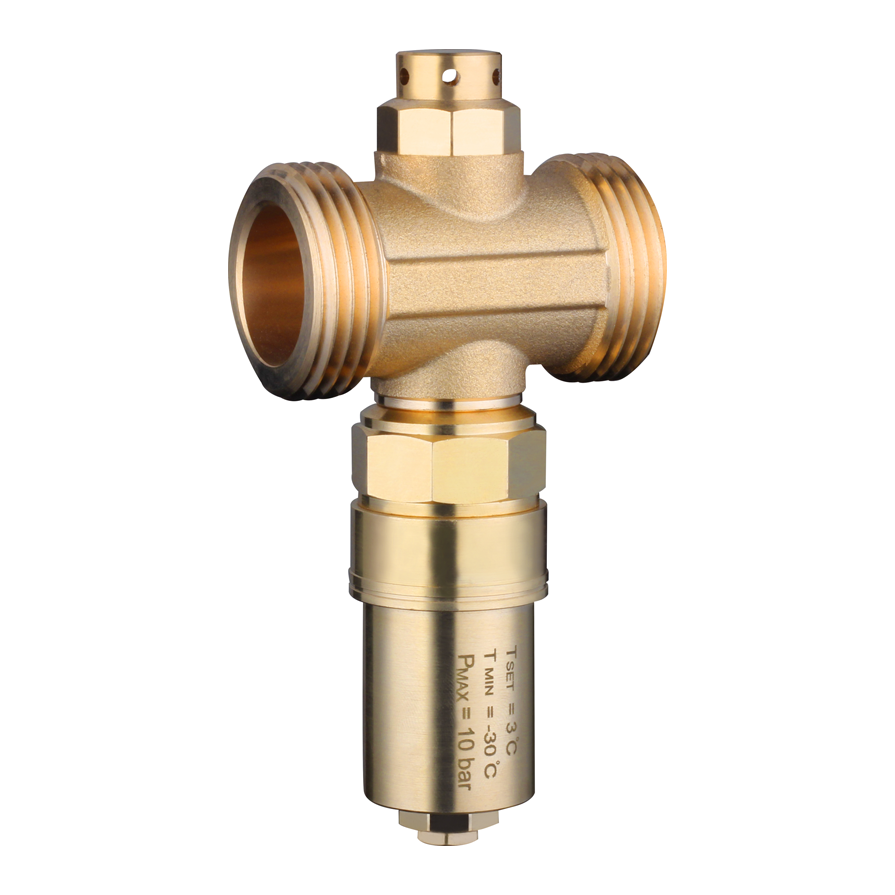
Industrial Tech News – In industrial production environments involving fluid transmission, pipeline safety under extreme low temperatures has always been a key factor restricting stable operation. Low-temperature freezing often leads to pipeline blockage, valve cracking, fluid leakage and even entire system shutdowns, bringing huge economic losses to industrial enterprises. Against this background, the professional Anti Freeze Valve for Industrial Applications has become an essential core component of cold-resistant pipeline systems. As a high-performance member of
Industrial Valves, this product far surpasses
Other Valves in low-temperature adaptability and operational stability, standing out among all kinds of
Quality Valves and becoming the preferred solution for industrial cold-proof pipeline protection.
Different from ordinary pipeline valves that only focus on flow control and sealing performance, the industrial anti-freeze valve is specially developed for low-temperature and freezing-prone working conditions. It adopts a unique self-drainage and temperature-sensing automatic protection structure, which can intelligently sense ambient and fluid temperature. When the temperature drops to the freezing critical point, the valve will automatically release residual fluid inside the pipeline to prevent water and other media from freezing and expanding. The product uses high-strength stainless steel valve body and low-temperature resistant sealing materials, which can maintain stable working performance in environments as low as -40 degrees Celsius, without brittle cracking or seal aging. It is widely applicable to industrial water supply and drainage systems, heating pipelines, chemical fluid transmission and outdoor industrial pipeline equipment in cold regions.
In comprehensive product comparison, the advantages of this industrial anti-freeze valve are clearly reflected when matched with mainstream Industrial Valves and Other Valves on the market. Traditional manual cut-off valves and ball valves can only realize simple switch and flow regulation functions, with no active anti-freeze protection mechanism. In winter low-temperature environments, residual fluid in the pipeline is extremely prone to freezing, causing valve jamming and pipeline rupture, requiring regular manual drainage and maintenance, which consumes a lot of labor costs. Ordinary low-temperature resistant valves only strengthen the material’s cold resistance but lack automatic drainage functions, still facing the risk of residual liquid freezing.
As a representative of high-standard Quality Valves, the industrial anti-freeze valve integrates temperature sensing, automatic drainage, cut-off control and pressure resistance functions. It does not rely on manual operation or external power supply, realizing passive intelligent anti-freeze protection, which greatly reduces the failure rate of cold-region pipeline systems. In terms of pressure resistance and durability, this valve can withstand industrial conventional working pressure up to 16 bar, with strong corrosion resistance and wear resistance, and its service life is 40% longer than that of ordinary Other Valves. Compared with expensive fully automatic electric anti-freeze valves, it has lower procurement and maintenance costs, higher cost performance and stronger adaptability to complex industrial working conditions.
For industrial purchasers and engineering contractors, scientific procurement strategies are the key to selecting qualified Industrial Valves and avoiding subsequent operational risks. First of all, users must prioritize professional industrial-grade anti-freeze valves instead of civilian low-temperature valves or ordinary regulating valves. Civil anti-freeze products have low pressure resistance and simple structure, which cannot adapt to high-pressure and high-load industrial pipeline operation, and are prone to failure in extreme working conditions.
Secondly, when screening Quality Valves, purchasers need to focus on core parameters including low-temperature resistance grade, working pressure range, automatic drainage sensitivity and material corrosion resistance. It is necessary to avoid low-cost inferior Other Valves that cut corners on materials and structural design. Inferior anti-freeze valves often have insensitive temperature sensing, incomplete residual liquid drainage and poor low-temperature toughness, which cannot provide effective anti-freeze protection and may lead to pipeline safety accidents.
In addition, it is recommended to select integrated anti-freeze valves with complete industry certification and standardized production. For outdoor industrial pipelines, long-distance fluid transmission systems and unattended industrial equipment, this type of valve can effectively reduce winter maintenance frequency and ensure continuous and stable system operation. Enterprises can make targeted specifications matching according to pipeline diameter, medium type and local minimum temperature to maximize product utilization.
Industry insiders said that with the expansion of industrial layout in high-latitude and cold regions and the upgrading of industrial safety production standards, the market demand for professional cold-resistant Industrial Valves is growing steadily. The industrial anti-freeze valve makes up for the functional defects ofOther Valves in low-temperature scenarios, and its reliable performance and high cost performance make it a typical representative of high-quality industrial pipeline accessories.
To sum up, the Anti Freeze Valve for Industrial Applications has irreplaceable advantages in cold-proof protection of industrial pipelines. It is a worthy investment among all Quality Valves for industrial engineering projects. Scientific selection and standardized installation can effectively eliminate low-temperature freezing risks, reduce equipment maintenance costs and provide solid safety guarantee for long-term stable operation of industrial fluid systems.