


Please Leave Us A Message
Privacy statement: Your privacy is very important to Us. Our company promises not to disclose your personal information to any external company with out your explicit permission.

Inside a thermostatic Radiator Valve, brass is rarely the biggest cost — machining time and the sensing head usually are. Buyers who negotiate only on "how many grams of brass" win a few cents and lose far more on rework and warranty claims.
A finished valve is quoted as one number, but it is built from four layers that behave very differently:
| Cost layer | Share of ex-works price | What moves it |
|---|---|---|
| Brass body + internals | 30–40% | Body weight (typically 180–420 g), DZR vs standard brass, wall thickness |
| Sensing head (wax capsule, piston, spring) | 15–25% | Capsule quality, calibration range, housing material, head thread standard |
| Machining and assembly labour | 20–30% | Cycle time per body, automation level, in-house vs outsourced machining |
| Testing, certification, packaging | 10–20% | 100% pressure testing, EN 215 scope, branding, retail cartons |
That weighting explains a pattern buyers see constantly: two quotations 40% apart on what looks like the same valve. The cheaper one usually saves on machining cycle time and skips individual calibration of each head.
A note on scope: TRVs sit at the cheap end of the HVAC Valve world, where a few cents per unit decide a tender, and at the expensive end of the components that decide whether a retrofit programme generates call-backs.
The Yuhuan-Shamen cluster in Zhejiang supplies a large share of Europe's brass heating components, and factories there buy copper alloy by the tonne. A factory that hot-forges its own blanks pays scrap-plus-conversion on brass; one that buys finished bodies pays a Distributor margin on top of that.
This is where choosing the right OEM thermostatic radiator valve supplier in China beats chasing the lowest quote. Zhejiang Xuananju HVAC Technology Co., Ltd. runs its own hot-forging shop, CNC machining floor, wax-capsule winding line, injection moulding and four assembly lines across 9,000 m². That vertical span is why a full Xuananju TRV with head sits in the lower half of the brass TRV wholesale price per unit 2026 band without cutting body weight to 150 g. For an importer, the practical test is not "who is cheapest this quarter" but "who can hold the same brass TRV wholesale price per unit 2026 on the repeat order."
EN 215 and TMV2 are not free. Certification testing, fixtures and annual surveillance typically add USD 0.30–1.20 per valve on a 30,000–50,000 unit run. The real cost is in the parts you must not change afterwards. Pay it once and it applies to every model in scope.
✅ Bottom line: Brass sets the floor, but machining time and head calibration decide the gap between a USD 4 valve and a USD 9 valve.
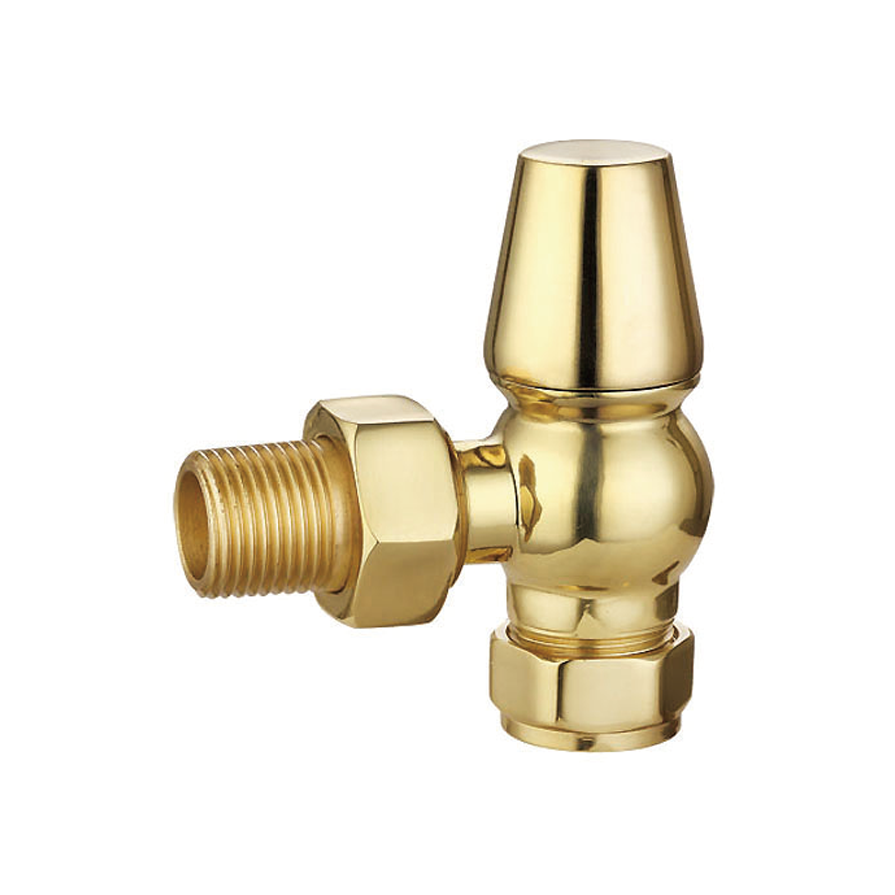
Price-led retail wants a standard TRV; specification-led markets — social housing, retrofit programmes, hotels — should pay for precise temperature control. The price difference is USD 1.50–3.00 per unit, and that gap is the practical answer to how much does a brass TRV cost from a China factory once the base price is settled. The difference on a site complaint is far larger.
The EN 215 datasheet is where the tiers separate. Every certified valve must publish hysteresis (C), response time (Z), water temperature influence (W) and control accuracy (CA). Thermostatic Radiator Valves sold into Europe are tested against this standard, and the declared spread between certified products is genuinely wide:
Response time and stability are different things. A slow head that holds ±0.2 K keeps a room comfortable. A fast head that overshoots 0.9 K makes the boiler cycle and the occupant complain.
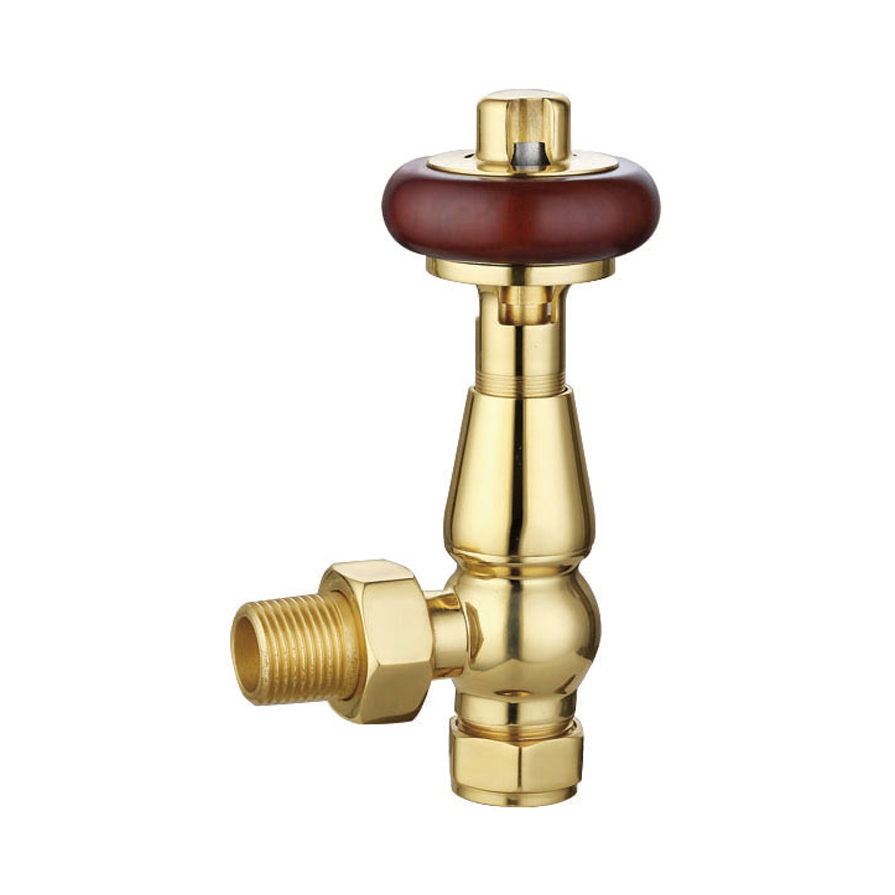
Xuananju TRV bodies ship in angle, straight and reverse-angle forms on a common M30 × 1.5 thread, so one head design covers the whole range — a real saving for distributors who stock heads separately.
✅ Bottom line: Standard heads suit price-led retail; calibrated heads suit retrofit and housing, where one call-back erases the USD 2 saved.
Most TRV sourcing losses happen after the price is agreed — in thread standards, spare-part strategy and MOQ structure. Each is fixable at specification stage and painful later.
The strongest lever for programme buyers is a supplier that calibrates every head and pressure-tests every body: your goods-in reject rate becomes their problem. Commodity traders cannot offer that, which is why a brass TRV wholesale price per unit 2026 comparison should always ask who owns the calibration fixture.
Q: Do you offer OEM and custom-branded TRV ranges?
A: Yes. As an OEM thermostatic radiator valve supplier in China, Zhejiang Xuananju HVAC Technology Co., Ltd. offers custom head printing, dial graphics, retail cartons and private-label packaging, with mixed-container orders across the full TRV Range .
Q: So how much does a brass TRV cost from a China factory?
A: At 30,000 units and above, a complete brass valve with Standard TRV head typically lands at USD 4.00–7.50 ex-works. Branded cartons, DZR brass and TMV2-scope heads move it upward by USD 0.50–2.00.
Q: Can one head design fit every body in a range?
A: With a shared M30 × 1.5 connection, yes — one head serves angle, straight and reverse-angle bodies, which simplifies radiator temperature control retrofits and cuts distributor inventory.
Q: Where can I find a vetted OEM thermostatic radiator valve supplier in China?
A: Start with factories that own forging, machining, capsule winding and calibration in-house, then verify the EN 215 certificate model list against the exact SKUs you intend to order.
Send your target models, market and annual volume. Xuananju returns an itemised quotation with body weight, head type, certification scope and packaging priced separately, plus matched samples for your own bench test. Ask for a free cost-breakdown review and a video walkthrough of the forging, machining, calibration and assembly lines.
Email to this supplier
Privacy statement: Your privacy is very important to Us. Our company promises not to disclose your personal information to any external company with out your explicit permission.
Fill in more information so that we can get in touch with you faster
Privacy statement: Your privacy is very important to Us. Our company promises not to disclose your personal information to any external company with out your explicit permission.